01 / 04Before the test
It starts with the doctor
The doctor asks about your symptoms and medical history and examines your ear to decide which measurements you need.
Hearing Assessment ClinicNow available at Tabeebuk Polyclinic
A hearing test inside a sound-treated booth, supervised by our ENT clinic — showing how well each ear hears, at every pitch.
Available with cash payment or through health-insurance service

Situations many people notice before asking for a hearing test:
You find it hard to follow conversations, especially in busy places.
You ask people to repeat themselves more than usual.
You turn the TV or phone up louder than others do.
One ear feels weaker than the other.
Your doctor has recommended a hearing test.
These signs do not necessarily mean hearing loss. Your doctor will assess your situation and decide which test is appropriate.
No needles, no pain. You simply listen and respond.
The doctor asks about your symptoms and medical history and examines your ear to decide which measurements you need.
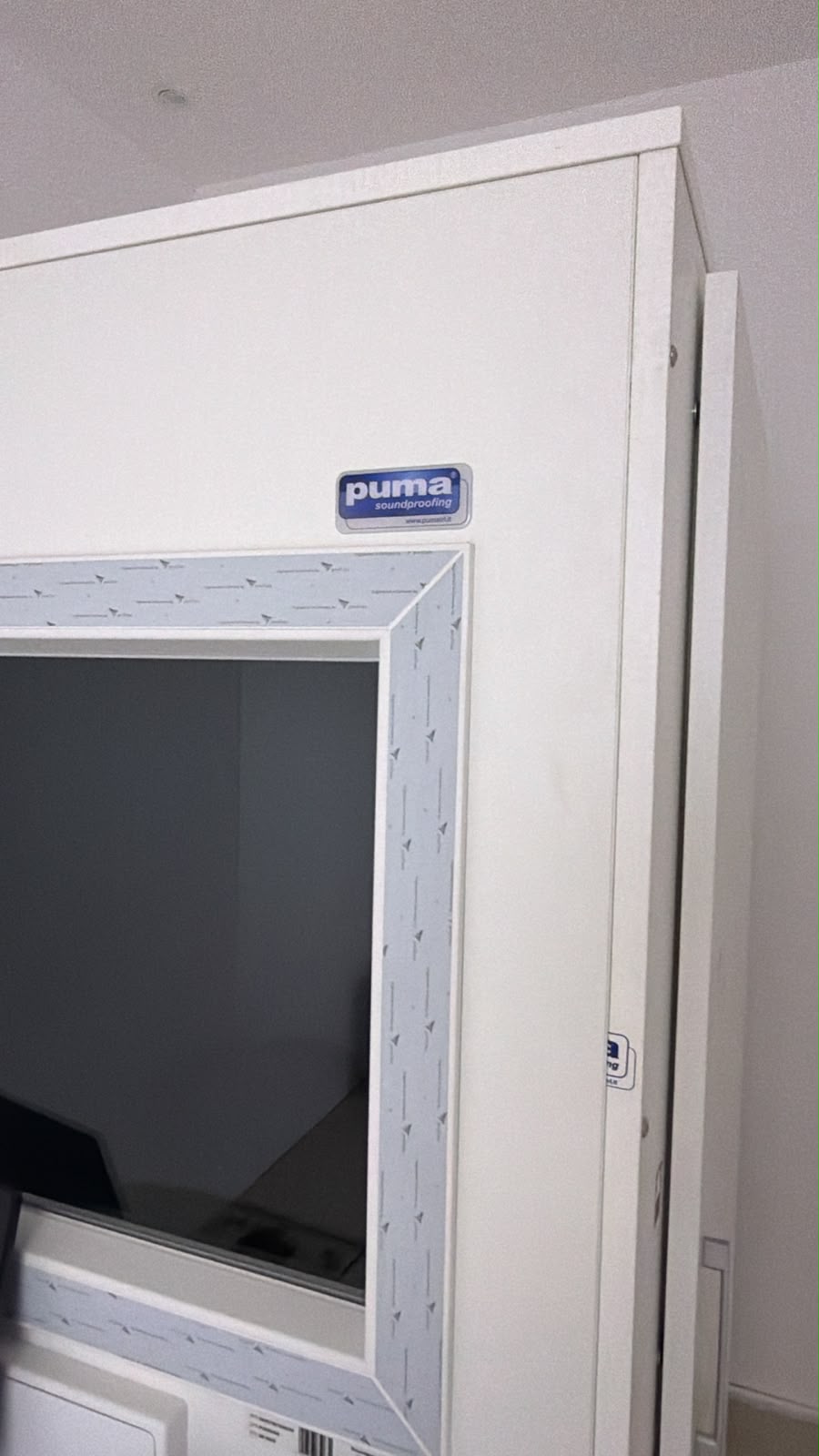
You sit inside a sound-treated booth that reduces noise from outside. Because the test relies on very soft sounds, the quiet helps the result reflect your hearing — not the room's noise. The specialist watches you through the window throughout.
You wear headphones and hear tones at different pitches and volumes, one ear at a time. You respond whenever you hear a sound, however faint, in the way the specialist explains.
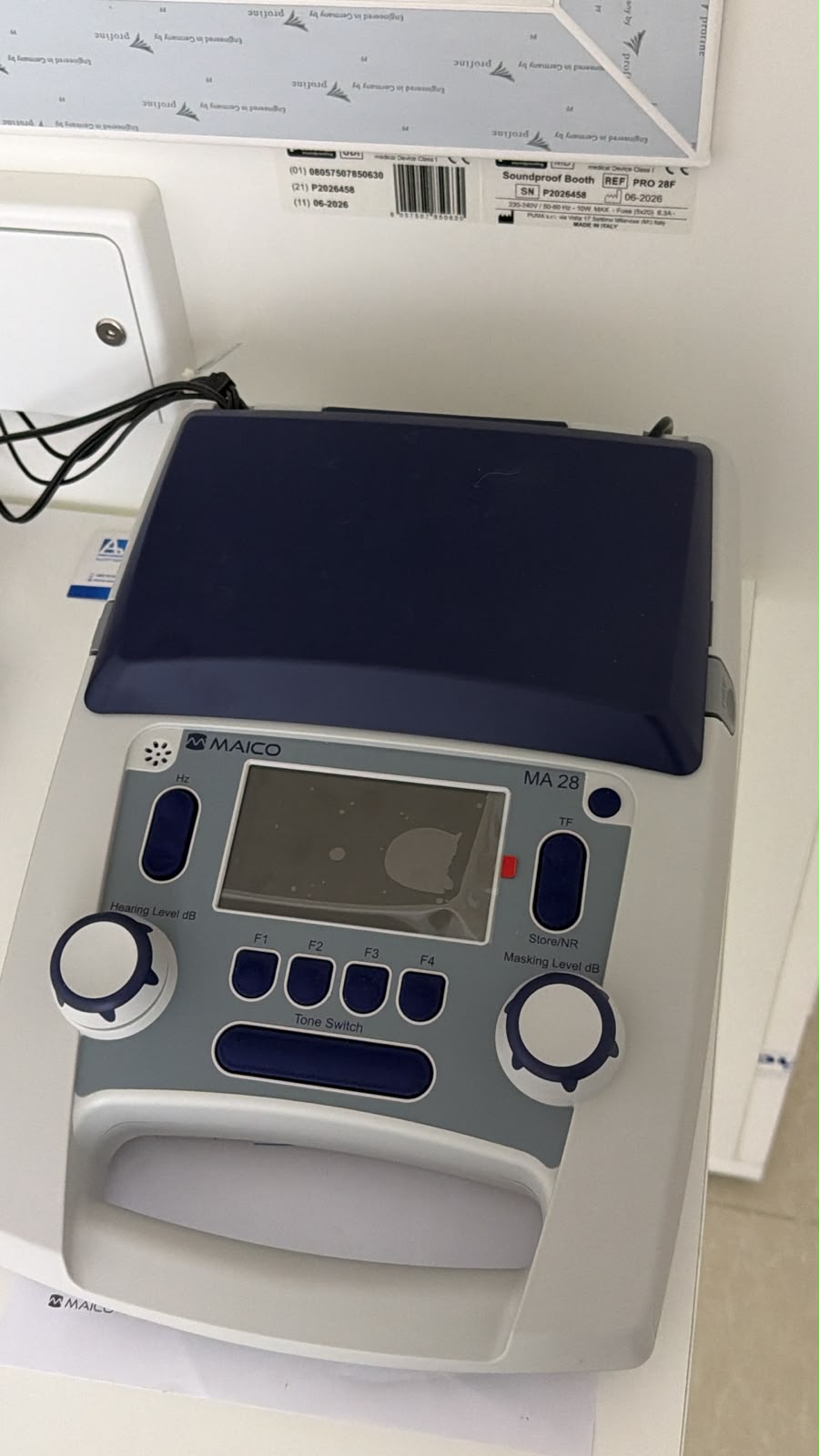
The test is performed with a MAICO MA 28, used at our clinic for air conduction, bone conduction and masking.
According to the manufacturer, the MA 28 is a pure-tone audiometer that allows control of frequency, hearing level and masking.
Every response is recorded on a chart called an audiogram, and the doctor explains what it means.
What happens after the test?Sound can reach the inner ear in two ways, and the test helps compare them. Choose one to see its path:
Tones are played through headphones and travel through the ear canal and middle ear to the inner ear.
Shows your hearing along the full natural pathway of sound.
The visit doesn't end with a chart. Depending on your situation, these are the steps that may follow:
The doctor reviews the audiogram with you and explains what it means for each ear.
They may recommend follow-up or treatment, depending on what you need.
If the test shows hearing loss, the doctor will discuss suitable options with you, including the hearing-aid services available at the polyclinic.
Ask about hearing aidsContact us to book an appointment with the ENT clinic, or to ask about the service.
Book on WhatsAppor call us directly